
 EN
EN
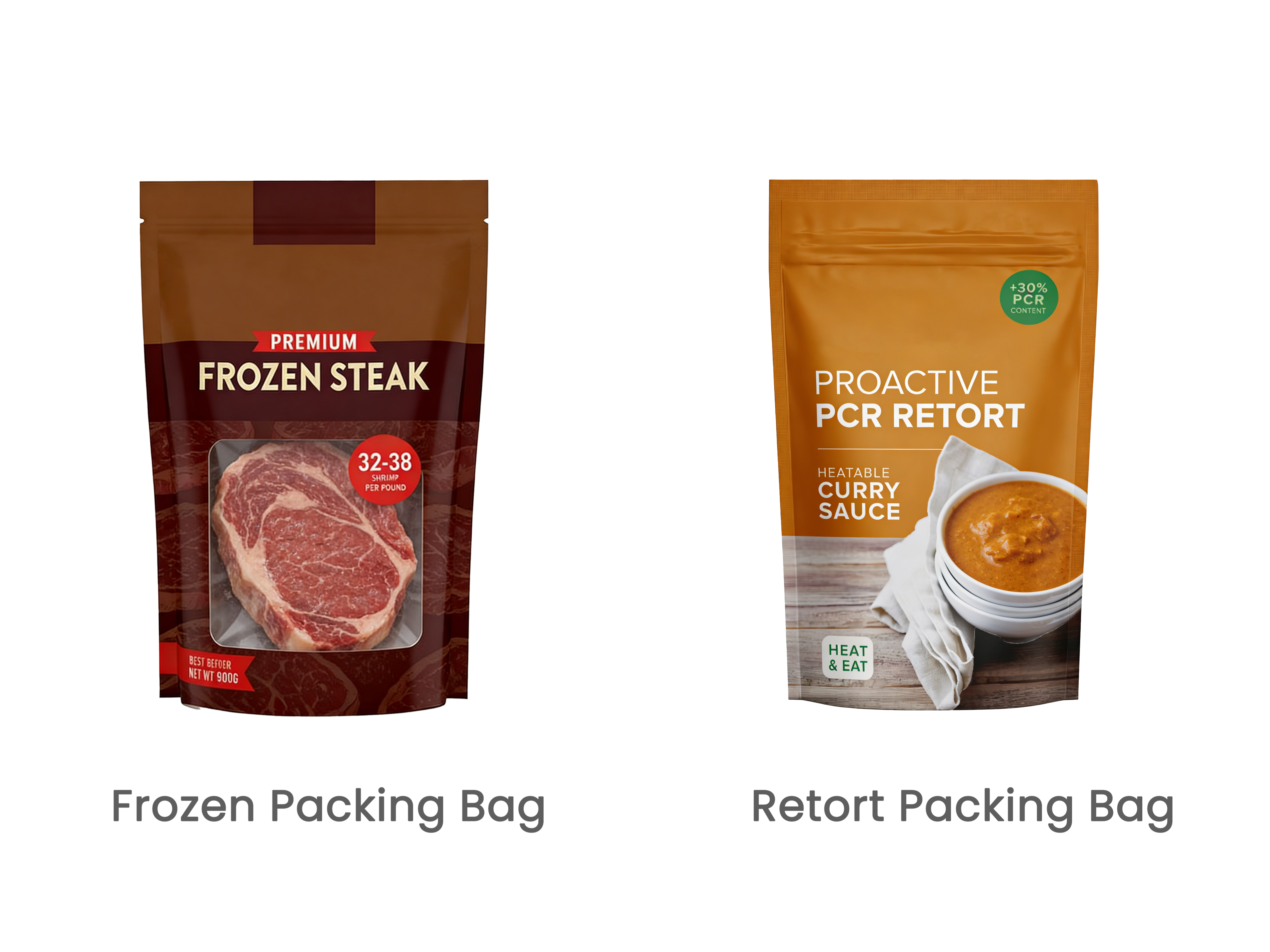
A package in the food industry is not merely a box, it is the guarantor of freshness, safety and quality. Cailyn Group with 21 years of experience in the industry of supplying food grade packaging solution and a thorough knowledge in the distinction difference between frozen food packaging material and high temperature food packaging material. Some of the key differences that can help brands to make effective decisions are as described below.
Core Material Requirements
Frozen food needs a resistant material to maintain its structure even in very low temperatures (typically, -18degC or lower) without brittle fractures or structural loss. The solutions offered by Cailyn involve the use of flexible films and food-grade materials which are most of the time reinforced with PE (Polyethylene) or PP (Polypropylene) layers in order to provide freeze protection as well as moisture barriers.
High-temperature food packaging (retort, microwave, or hot-fill) must be heat stable. The material should be able to withstand temperatures of over 100degC without releasing toxic elements. Here we have provided heat-sealable FDA and LFGB certified films, which include a barrier coating to preserve the flavor and avoid contamination.
Performance Priorities
Where frozen goods are involved, preservation of moisture (to keep it away from freezer burns) and can be viewed as the highest-priority as well as the flexibility (so that the shapes of the products can be accommodated when they are frozen) as the high-priority. Cailyn frozen foods will be packaged with multi-layers that will contain the moisture, but will not spoil the food in case it is stored in cold conditions.
High temperature packaging deals with the ability to withstand heat and with the ability to resist gases. The packaging is made in such a way that it does not become warped or deteriorated upon being heated and the package is very tightly sealed to maintain the shelf life - a very crucial factor with ready-made meals and processed foods.
Safety & Compliance Standards
These two variations of packaging must be of stringent world qualifications even though the requirements vary. Food packaging containers should comply with the standards of cold-chain safety and materials, which can withstand high temperatures, should be exposed to a severe test of chemical integrity based on the effect of heat influence. Their home laboratory assigns the manufacturing of all products to ISO9001, FDA and LFGB standards and Certificate that ensures the adherence to 60 or more markets across the global market.
Sustainable Solutions
The green practices are incorporated into the two categories by Cailyn. The frozen food packaging is done in recyclable or biodegradable layers and it has no effect on the carbon footprint since it has no effect on the freeze resistance. Alternatives to high temperatures are the FSC-certified paper and low-emitting films that facilitate the sustainable commitment of the brands concerning the need to perform the functions as required.
In order to maintain powder-based products such as supplement powder and milk powder, the packaging must offer high barrier properties, desirable resealability, and structural integrity. More flexible packaging solutions, developed strategically can be used to provide longer shelf life, reduce wastes, and create consumer trust. The packaging solutions provided by Cailyn provide both the support at the factory floor and up to the final application of both frozen and high-temperature food products.
Summary and Comparison
Structurally and functionally, there is also significant difference in terms of material composition and barrier strategies in frozen food packaging and high-temperature food packaging. Packages of frozen food are usually created in the range of -40degC to ambient temperature with the emphasis on the low-temperature toughness, impact resistance and waterproofness. Examples of common inner structural layers are LLDPE and copolymer PP, mixed with flexible structures like PET or PA, and optional additions of aluminum foil or metallized layers to increase the capability of moisture and oxygen barriers. In contrast, high-temperature food packaging is designed to withstand transient exposure to temperatures in excess of 135degC e.g. access in a retort sterilization or hot fill. Such applications require materials that have excellent thermal stability, chemical resistance and long-term barrier properties, and frequently make use of high-heat-resistant PET, PA, AL or special layer using RCPP. Adhesives in high temperature package should also be able to resist thermal load and not to delaminate and provide airtight closures and long shelf life to the products kept at room temperature. This structural basis of the difference automatically dictates the functional concern of each type of packaging- cold-chain preservation of frozen foods and sterilization and stability of heat-processed foods.