
 EN
EN
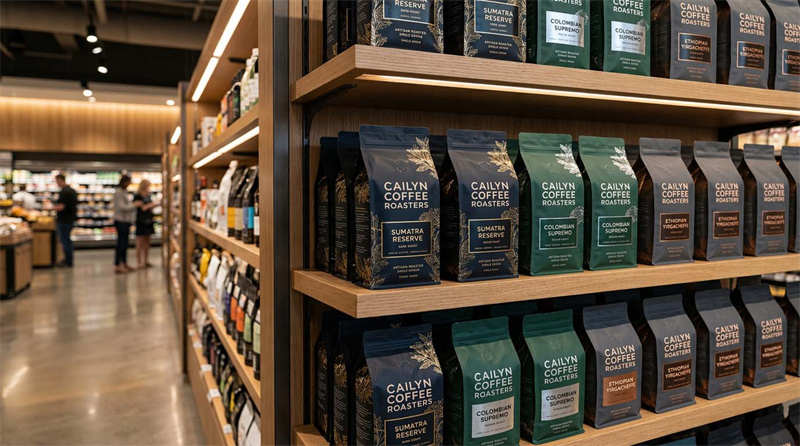
If you are bringing a brand into major supermarket chains and specialty gourmet shops,packaging is no longer just a container,it is a marketing tool. Every inch of retail space costs money,and every second a shopper spends searching for a product reduces your sales conversion. To meet the demands of high traffic retail environments, a flat bottom bag is the most shelf-efficient flexible packaging format because of its upright structure,maximum print real estate,and user friendly convenience. In this white paper,you will learn how to engineer flat bottom bags to achieve optimal shelf efficiency using retail merchandising techniques and sustainable packaging technology.
Five Printable Surfaces: Turning Packaging into a Brand Billboard
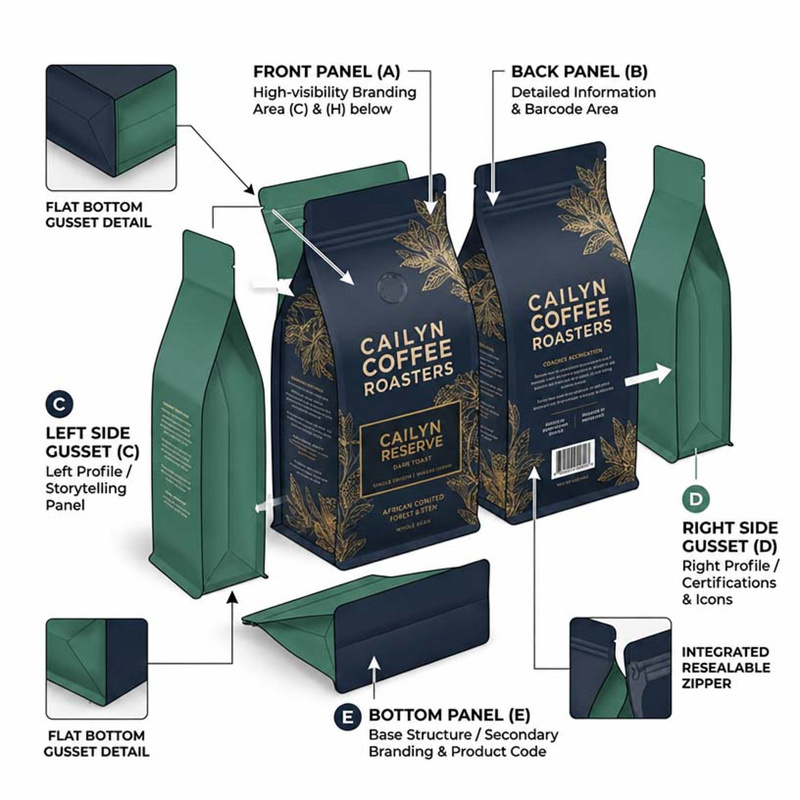
The standard stand-up pouch offers three printable surfaces (front,back,and small bottom gusset). The flat bottom bag gives you five unique printable surfaces (front panel,back panel,left side panel,right side panel,and a wide bottom). These five surfaces offer a complete 360° brand experience. A shopper approaches a retail shelf from any direction. On the front,the shopper see your logo;on the back,you can highlight nutritional and ingredient information. One side panel will show cooking and preparation directions,while the other side panel can reiterate your brand message or promotional offers. The bottom panel can be used for "shop with confidence" symbols such as recyclable food packaging logos or compostable graphics so that they are visible when the product is stacked. If your packaging is going into premium retailers such as Whole Foods or a specialty grocer,five panel print allows a deeper level of brand storytelling without appearing cluttered. Cailyn produces flat bottom bags with gravure and/or digital print across five panels and will guarantee color accuracy and registration on even narrow side gussets.
Structural Stability: Reducing Retailer Labor Costs
The time store employees spend propping up collapsing stand up pouches translates into labor dollars wasted. An obviously weak and unappealing stand up pouch may look uninviting and deter shoppers from browsing,while simultaneously obscuring the brand message. A flat bottom bag has a stable 40-60mm heat sealed base that acts as a shelf stand. With a flat bottom pouch there is no need for costly display rack hardware or wire supports and the labor cost for "facing correction" for supermarket display is 70% less for a flat bottom bag than for a three-side seal pouch. As bags are restocked,a flat bottom bag slides into place without upsetting the surrounding products,because a flat bottom bag would remain standing and not topple an entire row of merchandise like other pouch structures. Cailyn ensures our flat bottom pouches have both accurate bottom seal temperature control and strong side gussets that remain in place even with rough shipping,handling,and shopper engagement.
Lighting and Finish: Matte vs. Gloss Under Supermarket Lights
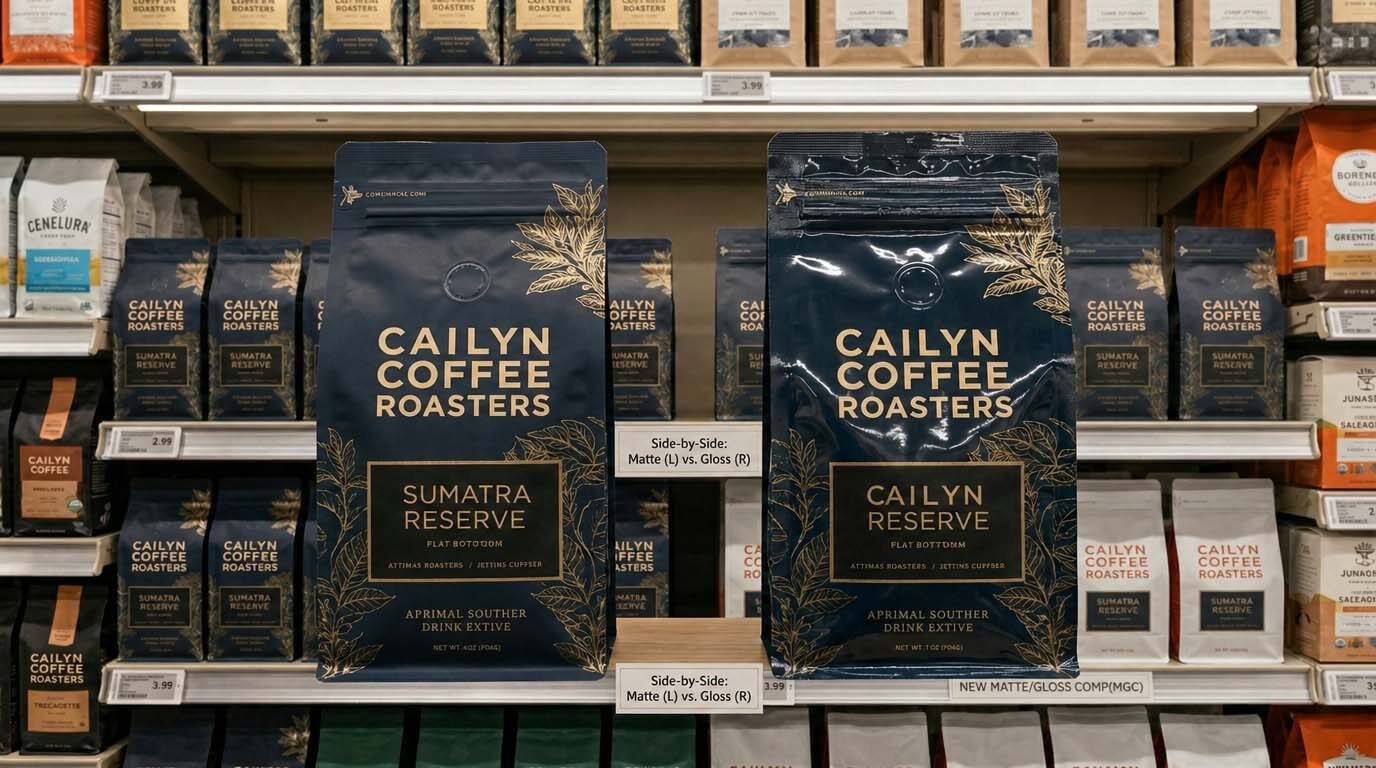
The artificial lights in a supermarket are 3,000-5,000 lux—typically a cool LED white or fluorescent bulb. Any glossy finishes will be directly reflected into the eyes of a consumer making it extremely difficult to read ingredient panel and nutritional charts,thus lowering your brand visibility and sales conversion. Matte finishes diffuse light making text and images more readable regardless of the angle of view. When using a matte finish as a final laminate for your flat bottom bags,consumers have an easier time understanding your ingredient panel and barcodes. The soft touch matte laminate on a premium product actually conveys a sense of quality. Glossy finishes are better suited for displays or impulse purchases such as check-out counter areas where a shiny product may draw attention,or for lower shelves where the light may reflect into shoppers' eyes. Many popular flat bottom bags have an ideal blend of both matte and gloss finishes on various panels to convey both luxury (Gloss for hero images/logos) and readability (Matte for text based panels). Cailyn prints with both finishes as well as specialized tactile or metallic with compatible materials.
Sustainable Materials: Meeting PPWR and Retailer Mandates
All major retailers,from Amazon to Whole Foods, have implemented or are enacting strict guidelines on packaging sustainability. The EU’s Packaging and Packaging Waste Regulation (PPWR) sets mandatory recyclability standards,while major chains like Carrefour,Tesco,and Aldi publish their own eco friendly food packaging scorecards. All mono material flat bottom bags (single polymer mono material packaging structure all PE or all PP) are completely recyclable within current plastic recycling streams. Mono material flat bottom bags don’t need special sorting,unlike mono material laminates that combining PET,aluminum,and nylon. Cailyn produces a recyclable pouch utilizing MDO-PE. This mono-material design allows the packaging to achieve excellent barrier properties without the use of EVOH or foil. By shifting to flat bottom mono-material bags now,brands focused on PPWR compliance by 2030 can get future-proofed ahead of new regulations. Cailyn also produces compostable structures if your brand prefers a certified bio-based route.
Shelf Efficiency Metrics: Space Utilization and Restock Frequency
Retailers assess shelf efficiency using two measures: cubic space utilization and turns per restock. The cubic space utilization is the percentage of the shelf display that the pack fills,and can be as low as 80% for a standard stand up pouch as it can lean or slump. All vertical sides will have 100% fill all the way to the bottom on a flat bottom bag. This means for one order at a specialty store,you can load 12 flat bottom bags (500 g coffee) per facing,compared to 8-9 standard pouches per facing,reducing your labor cost per unit by 25-30% per store. Cailyn can offer flat bottom bags for coffee (250g,500g,1kg),snacks,pet food,and other dry goods.
Practical Design Recommendations
We offer several design tips that make your flat bottom bag truly stand out on shelf. Your brand logo or mark should be placed on the front panel and your packaging can even include a repeat logo on the left/right sides. Use the back panel to display barcodes,ingredients,and cooking directions. It is often best to place graphics on the bottom panel so as not to distract from the face panels. For small text,use a matte finish so the consumer can read easily. If your design is for a premium brand we can print gloss logos and design on certain areas of the packaging. By using mono material polyethylene,your sustainable food packaging is already designed to meet mandates.
Conclusion: Flat Bottom Bag as Your Retail Growth Platform
The flat bottom bag is the pinnacle of flexible packaging efficiency in the retail environment. With five printable surfaces and superior shelf stability to eliminate retailer labor costs,combined with innovative matte/gloss finishes for readability under harsh lights and mono-material recyclable structures that comply with new PPWR mandates,it’s time to bring the flat bottom bag into your brand's packaging strategy. Contact Cailyn for custom printing plans and to receive a free consultation. Let us put your packaging to work.
Table of Contents
- Five Printable Surfaces: Turning Packaging into a Brand Billboard
- Structural Stability: Reducing Retailer Labor Costs
- Lighting and Finish: Matte vs. Gloss Under Supermarket Lights
- Sustainable Materials: Meeting PPWR and Retailer Mandates
- Shelf Efficiency Metrics: Space Utilization and Restock Frequency
- Practical Design Recommendations
- Conclusion: Flat Bottom Bag as Your Retail Growth Platform