
 EN
Drip Coffee Box Packaging Design: How to Choose the Right Structure for Your Market and Shipping Model
A premium drip coffee box is not defined only by a magnetic closure, a foil logo or a beautiful unboxing moment. It is defined by whether the structure fits the product, the target market and the way the product will reach the customer.
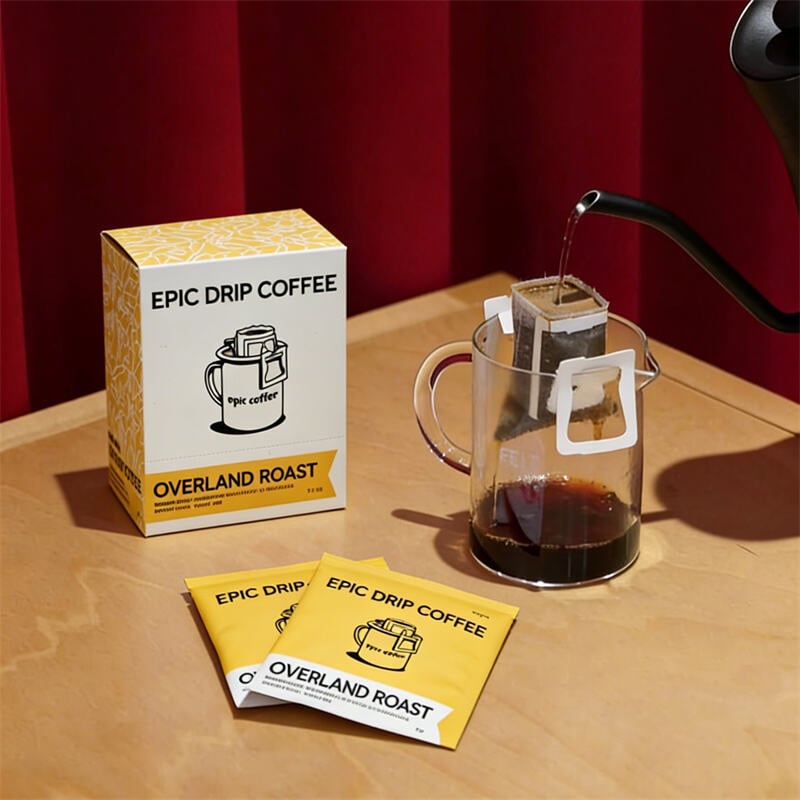
For a specialty coffee brand, the retail box needs to work with the hanging-ear filter, high-barrier outer sachet and coffee dose as one system. It should protect the individually packed coffee, present the brand clearly and make practical sense for filling, shipping and retail display. A rigid gift box can be the right choice for a finished premium set packed in China; a fold-flat carton may be a smarter choice when packaging is sent overseas for local filling.
This guide explains how to make those decisions before the artwork and sampling stage.
Start with the Complete Drip Coffee Packaging System
The outer box does not provide the main aroma barrier for drip coffee. That job belongs to the high-barrier individual outer sachet. The box has a different role: it organises the sachets, protects the retail set during handling, communicates the brand story and creates the opening experience.
For this reason, box development should begin with the full system:
• Coffee dose and filter format: hanging-ear or UFO filter
• Size of the individual high-barrier sachet
• Retail pack count: single serve, 5 pcs, 10 pcs or a gift collection
• Where the coffee will be filled and packed
• Target market, retail channel and planned shipping method
When these decisions are coordinated from the beginning, the box, sachet and filter fit together correctly—and the customer does not need to manage separate packaging suppliers alone.
Choose the Box Structure Based on Filling and Delivery
The most important structural decision is often not visual. It is whether the coffee will be packed as a finished product in China or whether the packaging will be shipped to the destination market for local filling.
| Fulfilment model | Recommended box | Main priority |
| Filled and packed in China | Rigid box, drawer box, magnetic gift box | Strong structure and premium presentation |
| Filled locally in destination market | Fold-flat tuck-end box or auto-bottom carton | Lower freight and storage cost |
| E-commerce or DDP delivery | Lightweight folding carton | Lower volumetric weight and less empty space |
| Premium gift or seasonal collection | Drawer box, rigid box or divider gift box | Better unboxing and higher perceived value |
| Supermarket or café retail | Tuck-end carton or display tray | Efficient packing, stocking and shelf display |
| Sampler or subscription set | Folding box with divider or book-style box | Keep multiple flavours organised |
If coffee is filled and packed in China as a complete retail set, a rigid or drawer-style box can be a worthwhile choice. The product is already assembled before export, so structural strength, shelf impact and the tactile experience can take priority.
If the filters, sachets and boxes are sent to the destination country for local filling, a fold-flat carton is usually more efficient. Flat-packed cartons use far less shipping space, lower storage cost and can be assembled after the sachets are packed. In this model, a premium experience can still come from carefully designed artwork, an insert card, a divider or a well-organised inner layout—not only from a heavy rigid box.
Design for the Target Market and Retail Context
There is no single premium style for every coffee market. The right design direction should be based on the customer, the retail environment and the brand's price point.
|
Target market or channel |
Design direction |
Packaging focus |
|
Japan |
Clean layout, refined details, warm neutral colours and compact presentation |
Precise folding cartons and carefully matched sachets for premium gifting |
|
Europe |
Natural palette, clear sustainability communication and restrained finishes |
Paper-led presentation; consider recyclable design choices early |
|
Middle East |
Richer contrast, metallic accents and Arabic/English layouts where needed |
Gift-ready structures and strong shelf impact |
|
USA café and retail |
Clear roast and flavour information, bold recognition and practical multipacks |
Lightweight cartons, display-ready formats and efficient case packing |
|
Subscription and online sales |
Simple visual hierarchy, assortment identification and a memorable opening sequence |
Compact fold-flat boxes, insert cards and controlled shipping volume |
These are starting directions rather than fixed rules. A luxury café in New York may need a gift-style box, while a value-focused retail line in Japan may need a compact folding carton. The important point is to choose the material and structure around the intended sales experience.
Use Materials and Finishes with a Clear Purpose
Premium packaging does not require every possible finishing technique. The right material and finish should support the brand's story and price position.
Coated paperboard gives a clean surface for detailed graphics and strong colour reproduction. Kraft-look paper can support a natural or craft-focused direction. Corrugated board may be appropriate for mailer boxes, retail displays or protective outer cartons. Rigid board is suitable for premium gift sets when the added structure and presentation justify the additional material and shipping volume.
For printing, digital printing is useful for low-volume launches, samples and frequent artwork changes. Offset printing is commonly suited to folding cartons and paper boxes at larger quantities. Flexographic printing can be a practical choice for corrugated display or shipping cartons. Special finishes such as matte lamination, soft-touch film, foil or spot UV should be used selectively to add contrast and a premium touch without overcomplicating the pack.
For Europe-focused projects, recyclability, material efficiency and applicable packaging requirements should be considered during development rather than added as a final marketing claim. This is especially important when combining paperboard with films, laminations or metallic finishes.
Create an Unboxing Journey That Works in Real Life
A good unboxing experience is a sequence, not simply a decorative box.
The outer panel should quickly tell the customer what the coffee is: roast level, flavour notes, origin or blend name, and pack count. Once opened, the sachets should be stable, easy to remove and clearly organised. For sampler sets, a divider or numbered layout can guide the customer through different flavours. A printed brewing card can add value without adding significant weight or complexity.
The goal is to make the customer feel that the product has been considered at every stage—from opening the box to brewing the final cup. At the same time, the structure must remain suitable for packing, carton loading and transport.
Keep the Filter, Sachet and Box Visually Aligned
Drip coffee packaging often combines several materials: a brewable filter, a high-barrier outer sachet and a paperboard box. Those materials do not reproduce colour in exactly the same way. Film, white card, kraft paper and metallic surfaces all respond differently to ink and surface treatment.
Cailyn coordinates the packaging set as one project, helping brands review artwork, dimensions and colour targets across the filter system, outer sachet and box. The goal is not to promise an impossible zero colour difference across all substrates. It is to ensure the full set looks intentionally coordinated on shelf and in the customer's hands.
This integrated approach also helps confirm that the individual sachets fit the selected box before bulk production. For example, a 5-piece or 10-piece drip coffee box can be developed around the actual sachet size and pack arrangement, avoiding wasted space or product movement inside the box.
One Packaging Partner from Development to Delivery
With more than 21 years of packaging manufacturing experience and a base in Wenzhou, one of China's major packaging manufacturing hubs, Cailyn coordinates flexible packaging, paper packaging and drip coffee packaging components through one project team.
Different components require different specialist production processes. Where qualified local production partners are involved, Cailyn coordinates the specifications, artwork, production timing and quality requirements, while retaining responsibility for final inspection and export readiness.
This allows a brand to develop the drip coffee filter, high-barrier outer sachet, retail box, insert card and shipping carton as one system. It can reduce artwork revisions, help manage colour differences between film and paper, confirm pack fit before bulk production and simplify final inspection.
Depending on destination, shipment volume and product requirements, Cailyn can also assist with air freight, sea freight and DDP shipping options for selected destinations. The best packaging solution should be evaluated by its full landed cost—not only by the factory price of the box.
Build the Right Drip Coffee Box for Your Brand
A premium drip coffee box is not always a rigid box. The right structure depends on where the coffee is filled, how the product is shipped, how it will be sold and what the customer should experience at the point of purchase.
Share your filter style, coffee dose, pack count, target market, filling location, artwork status and estimated quantity. Cailyn can recommend a coordinated drip coffee filter, outer sachet and box solution, together with suitable printing, sampling and delivery options.
Table of Contents
- Drip Coffee Box Packaging Design: How to Choose the Right Structure for Your Market and Shipping Model
- Start with the Complete Drip Coffee Packaging System
- Choose the Box Structure Based on Filling and Delivery
- Design for the Target Market and Retail Context
- Use Materials and Finishes with a Clear Purpose
- Create an Unboxing Journey That Works in Real Life
- Keep the Filter, Sachet and Box Visually Aligned
- One Packaging Partner from Development to Delivery
- Build the Right Drip Coffee Box for Your Brand