
 EN
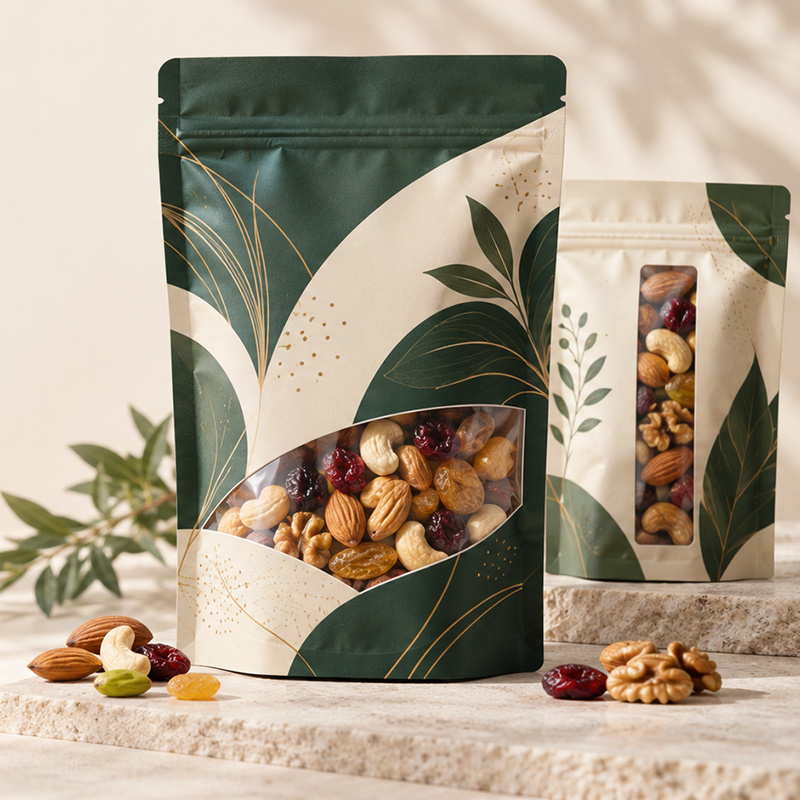
A clear window can make a snack pouch far more persuasive on the shelf. It lets shoppers see the golden colour of chips, the texture of granola, the size of nuts or the bright pieces in a fruit mix before they buy. For a new snack brand, that visibility can create confidence quickly.
But a transparent window is not simply a design feature. It changes the packaging system. The larger the clear area, the more carefully a brand must consider light exposure, oxygen, moisture, seal integrity and the intended shelf life.
So, do clear windows reduce snack shelf life? They can—if the window material, window size and pouch structure are not matched to the product. With the right design, however, a clear window can provide product visibility while keeping protection at an appropriate level for the snack and its retail environment.
Why Consumers Respond to Clear-Window Snack Packaging
Snack buyers often make decisions in seconds. A window helps them check the product's colour, size, coating and texture without opening the pack. This is particularly useful for products such as nuts, dried fruit, trail mix, granola, crackers and confectionery, where the product itself is an important part of the brand appeal.
For brands, the objective is not always to show as much product as possible. It is to reveal enough product to build trust while retaining the protective performance the snack needs. A narrow vertical strip, a small lower-front panel or a custom die-cut window can sometimes achieve more than a fully clear front pouch.
The Real Trade-Off: Visibility, Light and Barrier Performance
Opaque packaging areas can use structures designed to control light exposure and support the desired oxygen and moisture barrier. Metallised films and aluminium-based barrier layers are common choices where a product requires a strong opaque barrier.
A clear window cannot use those same opaque layers. Its performance depends on the transparent film structure selected. Standard clear films may be suitable for some products and shelf-life targets, but they should not automatically be treated as high-barrier or UV-protective materials.
For products that are sensitive to light, oxygen or humidity, the packaging solution may involve one or more of the following:
Reducing the window size
Placing the window away from the most exposed shelf-facing area
Using a tinted or partially transparent window
Evaluating a transparent barrier structure where appropriate
Increasing protection in the opaque pouch areas
Validating the final pack against the product's target shelf life
The right choice depends on the snack formulation, its fat content, water activity, filling method, retail environment and expected storage period.
Which Snacks Need More Careful Window Design?
| Snack type | Main packaging concern | Recommended window approach |
|---|---|---|
| Potato chips, crackers and puffed snacks | Moisture uptake can reduce crispness | Use a small or narrow window and prioritise moisture barrier, seal strength and puncture resistance. |
| Nuts and roasted seeds | Oxidation and rancidity, especially for higher-fat products | Consider a limited window or tinted window; retain sufficient opaque barrier area. |
| Chocolate-coated snacks | Light exposure, bloom risk and heat-sensitive appearance | Keep the window modest and consider the product's display conditions. |
| Dried fruit | Moisture migration, stickiness and product appearance | Use a window only with a pouch structure suited to the intended shelf life and reseal requirement. |
| Granola and trail mix | Mixed ingredients with different sensitivities | A front strip or side window often balances visibility with protection. |
| Candy and gummies | Appearance and product visibility | A larger window may be possible, but film, seals and distribution conditions should still be assessed. |
| Jerky and meat snacks | Oxygen control, strong seals and puncture resistance | Use a smaller window and prioritise the complete barrier and sealing system. |
This table is a starting point, not a substitute for product testing. The snack producer remains best placed to define the required shelf life, storage conditions and food-safety specifications.
Three Window Styles to Consider
1. Full Clear Front
A full clear front creates the strongest product display. It can work well for snacks with a lower sensitivity to light, or for short-turnover products sold in controlled retail environments. However, it leaves less room for opaque barrier material and can be less suitable for products that are highly sensitive to oxidation or light exposure.
2. Narrow Strip or Side Window
This is often the most practical option. A narrow strip still lets consumers see the product, while more of the pouch can remain opaque for branding and protection. It is a strong choice for nuts, granola, chips and dried snacks.
3. Custom Die-Cut Window
A window shaped like a leaf, nut, fruit slice or brand symbol can create a distinctive shelf identity. The design should allow enough distance from seals, gussets and high-stress fold areas so that the pouch remains reliable during filling, transport and handling.
Pouch Structure Matters as Much as the Window
The window is only one part of the package. Brands should select the pouch format around the product weight, display channel and expected consumer use.
Stand-up pouches are versatile for snacks, offering strong shelf presence and options such as zippers and tear notches.
Flat-bottom bags create a more structured, premium presentation with additional printable panels for product information.
Three-side-seal pouches are compact and cost-efficient for single portions, samples and smaller snack packs.
Rollstock film can be considered for brands using automated packaging lines, provided the film structure, roll direction and machine parameters are confirmed in advance.
For each format, the material structure must be chosen as a complete system: outer print layer, barrier layer where needed, and food-contact sealing layer. The window layout must also work with the pouch's sealing and gusset construction.
Do Not Treat Kraft Paper as a Barrier Claim
A kraft-paper look can communicate a natural or artisanal brand identity, especially for granola, dried fruit and plant-based snacks. But a kraft surface alone does not determine the shelf life, recyclability or barrier performance of the finished pouch.
The final result depends on the complete laminate structure, the clear-window material, the closure system and the destination market's collection infrastructure. For this reason, sustainability claims should be assessed case by case rather than based on appearance alone.
Printing and Finishing Around the Window
The opaque areas around a window are valuable brand real estate. Matte, gloss, soft-touch, metallic accents, spot effects and carefully placed product information can frame the window and guide the shopper's eye toward the product.
For short runs, samples or new-market tests, digital printing can be a practical choice. For established, higher-volume flexible packaging programmes, rotogravure printing is generally better suited to stable repeat production, subject to approved artwork and colour targets. The best route depends on order quantity, artwork complexity, material structure and launch timeline.
Test the Final Packaging System Before a Full Launch
Before approving mass production, brands should review the finished pouch—not only the design file. A meaningful pre-production check should consider:
Window placement and product visibility
Seal position, seal width and pouch strength
Zipper and tear-notch performance, where used
The product's behaviour during filling, transport and shelf display
Whether the final packaging structure supports the intended shelf-life target
For sensitive snack products, it is sensible to validate performance with the actual product under the relevant storage conditions. Packaging can support freshness, but it must be matched to the food, process and distribution plan.
One Coordinated Packaging Programme from Cailyn
Snack brands often source flexible pouches, labels, retail cartons and shipping cartons from separate suppliers. That can create extra communication work, inconsistent colour across different materials and more complicated freight coordination.
Cailyn helps coordinate the complete packaging programme: flexible pouch format, window layout, material structure, printing route, labels, paper boxes and outer cartons. Our Wenzhou manufacturing base combines flexible-packaging capability with a qualified local specialist network, while final quality inspection is managed by Cailyn.
Whether you are launching a small snack test, developing a premium retail pouch or scaling an established line, our team can help you assess the structure and presentation that fit your product, budget and supply plan. DDP shipping options are also available for selected destinations.
A clear window should not be chosen simply because it looks attractive. When designed as part of the full packaging system, it can make your snack easier to trust, easier to notice and better protected on its journey to the shelf.
Table of Contents
- Why Consumers Respond to Clear-Window Snack Packaging
- The Real Trade-Off: Visibility, Light and Barrier Performance
- Which Snacks Need More Careful Window Design?
- Three Window Styles to Consider
- Pouch Structure Matters as Much as the Window
- Do Not Treat Kraft Paper as a Barrier Claim
- Printing and Finishing Around the Window
- Test the Final Packaging System Before a Full Launch
- One Coordinated Packaging Programme from Cailyn