
 EN
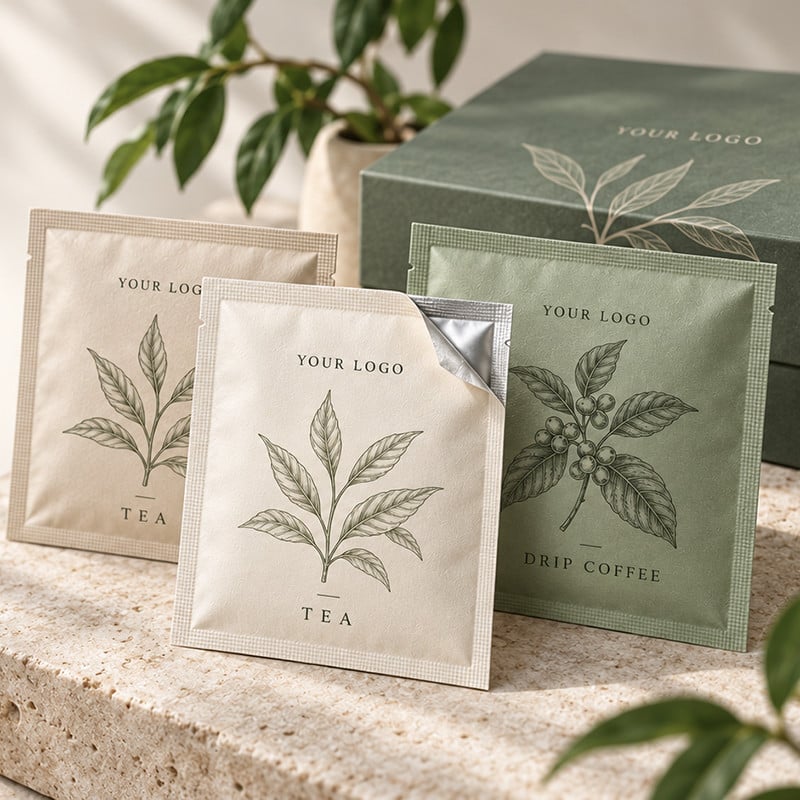
Tea Packaging Options Explained: How to Choose Tins, Pouches, Tea Bags and Filters for Your Brand
Tea packaging should not be chosen by appearance alone. A bright, delicate green tea, a finely milled matcha powder and an ageing-oriented dark tea do not have the same storage needs—or the same ideal packaging system.
For tea brands, the practical question is not simply whether to use a tin, pouch or box. It is how to combine the right inner protection, consumer format and outer presentation for the tea, the target market and the way the product will be filled and shipped. This guide explains how to make that decision.
Start with the Tea, Not the Outer Pack
Tea can lose aroma, absorb foreign odours or take on moisture when packaging is not matched to the product. The risk is not identical for every tea.
Fresh green teas and matcha generally need strong protection from oxygen, moisture and light. Scented teas need protection from aroma loss and odour transfer. Some dark teas and certain traditionally processed teas may be sold with a controlled-ageing story, where the producer's storage approach matters as much as the package barrier.
That is why a tea tin, a pouch or a paper tube should usually be considered as part of a system. In many cases, a high-barrier inner bag protects the tea, while the tin, tube or carton creates the retail experience.
Tea Packaging Recommendations by Tea Type
|
Tea type |
Main packaging priority |
Recommended packaging system |
Key considerations |
|
Green tea |
Freshness, low oxygen and light protection |
High-barrier inner pouch + folding carton, paper tube or labelled tin |
Green tea is usually valued for fresh, bright flavour. Use a well-sealed inner pouch and avoid unnecessary heat exposure during storage and transport. |
|
Matcha powder |
Maximum barrier protection and practical portion control |
High-barrier foil pouch or sachet + tin, carton or paper tube |
Matcha is finely milled and particularly sensitive to oxygen, moisture and light. Smaller packs, individual sachets or resealable pouches help protect the product after opening. |
|
White tea |
Moisture and odour protection with premium presentation |
High-barrier inner pouch + paper tube, tin or gift box |
Some white teas may be stored for longer under suitable conditions, but packaging must still protect against moisture, light and external odours. |
|
Oolong tea |
Aroma retention and premium presentation |
High-barrier inner pouch + tin, paper tube, stand-up pouch or gift box |
Fresh floral oolongs need strong barrier protection. Some roasted oolongs may be suitable for controlled storage, but this should follow the tea producer's process and recommendation. |
|
Black tea |
Aroma retention and efficient retail packing |
Inner pouch + folding carton, stand-up pouch or tea-bag sachet system |
Black tea is generally more stable than green tea, but it still needs protection from moisture and foreign odours. |
|
Pu-erh and dark tea |
Packaging aligned with the intended ageing and storage method |
Paper wrap, paper box, paper tube or breathable outer pack; protective inner packaging when appropriate |
These products can have different storage philosophies. Confirm whether the brand wants a sealed retail presentation or a more breathable format before selecting materials. |
|
Scented tea |
Aroma retention and odour isolation |
High-barrier pouch + carton, tin or paper tube |
Jasmine tea and other scented teas can lose fragrance or absorb external odours easily. A securely sealed inner pouch is especially important. |
|
Herbal and fruit tea |
Moisture protection, pouch strength and ingredient containment |
Filter bag + outer sachet + carton, or a high-barrier stand-up pouch |
Dried fruit, flowers and herbal blends may contain larger or sharper pieces. Consider seal strength, puncture resistance and reseal convenience. |
|
Premium loose-leaf tea |
Freshness protection plus gifting value |
High-barrier inner pouch + custom tin, paper tube, rigid box or folding gift box |
Let the inner pouch protect the tea and let the outer pack create shelf impact, storytelling and a premium unboxing experience. |
|
Everyday tea bags |
Hygiene, convenience and portion consistency |
Paper, non-woven or PLA filter + individual outer sachet + retail carton |
The filter, outer sachet and box should be designed together. Individual sachets can improve hygiene and protect aroma before brewing. |
Tea Tins: Premium Presentation Without Unnecessary MOQ Pressure
Tea tins are popular because they feel durable, giftable and reusable. However, a metal tin by itself should not be assumed to provide the full freshness barrier required for every tea. For most loose-leaf tea applications, it is better to pair the tin with a properly sealed high-barrier inner bag.
For brands testing a market or launching a small collection, Cailyn keeps selected 30 g, 50 g and 100 g stock tins available for custom labels or stickers. This gives a lower-MOQ route to a branded tin without the high tooling cost and large order quantity normally associated with a fully custom metal tin. The actual fill weight should always be confirmed with the tea sample because leaf density and shape vary greatly.
For a more paper-led option, paper tubes can also be customised. Existing tube moulds can reduce development cost and lead time, while a suitable inner bag protects the tea from moisture and aroma loss. Ask our team about available diameters and heights before finalising the pack size.
Flexible Pouches: The Freshness Layer for Loose-Leaf Tea
Flexible pouches are lightweight, space-efficient and adaptable to many tea formats. They can be used as the primary retail pack or as the inner bag inside a tin, carton or paper tube.
Common options include stand-up pouches for shelf display, flat-bottom bags for a more structured premium appearance, three-side-seal bags for compact portions and resealable pouches for larger loose-leaf packs. A zipper is useful for repeat use, but it should not replace the initial freshness seal; tea is normally packed with a heat seal above the zipper.
For 250 g and 500 g refill packs, the best choice often depends on leaf size, how frequently the consumer opens the pouch and the distribution channel. E-commerce brands may prioritise a lighter, more compact pouch, while retail brands may use a pouch plus an outer carton for stronger shelf communication.
Tea Bags, Filters and Outer Sachets: Design Them as One System
For single-cup tea, the brewable filter is only one part of the product. The complete system usually includes the filter bag, string and tag where required, an individual outer sachet and a retail box.
Filter choices can include paper, non-woven material and PLA, depending on the desired appearance, brewing experience and storage plan. The tea particle size, filling weight and brew time should be considered before finalising the filter dimensions and mesh. The outer sachet then protects the tea from moisture, oxygen and aroma loss until the consumer opens it.
This is particularly important for herbal blends, flower teas and fine powders, which may need different filter structures from conventional tea leaves. By coordinating filters, outer sachets and cartons together, the finished product is easier to pack, more consistent to present and simpler to source.
Retail Boxes: Choose Structure Based on Filling Location and Logistics
The best box structure is not always the most elaborate one. It should match where the tea will be filled, how it will be shipped and the customer experience the brand wants to create.
|
Supply and filling model |
Suitable outer packaging |
Why it works |
|
Tea is filled and packed in China before export |
Rigid box, tin gift set, paper tube or sturdy folding carton |
When the finished product is shipped as a complete set, structural stability and premium presentation can take priority. |
|
Packaging is shipped empty and filled in the destination market |
Flat-packed folding carton, sleeve or compact display box |
Foldable structures reduce shipping volume and make local filling and assembly more efficient. |
|
Single-cup tea bags |
Tuck-end carton, drawer box or small display carton |
Protects individual sachets and creates space for brewing instructions, flavour information and brand story. |
|
Gift or seasonal collection |
Rigid box, magnetic box, drawer box or tin-and-carton set |
Supports a more memorable unboxing experience and protects multiple components in one presentation. |
Choose Materials and Printing with the Whole Packaging System in Mind
The material and printing route should be selected after the tea, pack format and order volume are clear.
• Digital printing can be a practical option for samples, market tests and smaller runs.
• Rotogravure printing is generally more suitable for established, higher-volume flexible-pouch programmes that require stable repeat production.
• Paper cartons can use digital or offset printing according to the run size, structure and finish requirements.
• Sustainability claims should be assessed by the full material structure, local collection route and the actual end market—not by the appearance of a kraft surface alone.
A coordinated packaging programme also helps avoid a common sourcing problem: buying filters from one supplier, high-barrier sachets from another and paper boxes from a third. Different materials and printing processes can increase communication work, create colour variation and add separate freight movements.
One Partner for the Complete Tea Packaging System
Cailyn brings together flexible pouches, high-barrier inner bags, tea filters, outer sachets, labels, cartons, paper tubes and tin-labelling options in one coordinated packaging programme. Our Wenzhou production base, experienced printing equipment and qualified local specialist network allow us to match each component to the final product while keeping final quality inspection under Cailyn's control.
Whether you are developing a small labelled-tin launch, a 250 g loose-leaf refill pouch, a premium tea gift set or individually wrapped tea bags, we can help you select the right material, structure, printing route and shipping plan. DDP shipping options are also available for selected destinations.
The result is not simply a better-looking tea pack. It is a packaging system designed around how the tea should be stored, sold, shipped and enjoyed.
Table of Contents
- Tea Packaging Options Explained: How to Choose Tins, Pouches, Tea Bags and Filters for Your Brand
- Start with the Tea, Not the Outer Pack
- Tea Packaging Recommendations by Tea Type
- Tea Tins: Premium Presentation Without Unnecessary MOQ Pressure
- Flexible Pouches: The Freshness Layer for Loose-Leaf Tea
- Tea Bags, Filters and Outer Sachets: Design Them as One System
- Retail Boxes: Choose Structure Based on Filling Location and Logistics
- Choose Materials and Printing with the Whole Packaging System in Mind
- One Partner for the Complete Tea Packaging System