
- Home
- Products
- Sustainability
- Solution
- About Us
- Download
- News
- Contact Us

Spout pouches have revolutionized packaging, offering alternative option a practical, lightweight, and eco-friendly. Their unique design combines flexibility with functionality, making them an ideal choice for a wide range of products
These pouches are incredibly versatile, accommodating liquids like juices and oils, semi-liquids such as sauces and yogurts, and even powders like protein mixes or detergents. Their resealable spouts provide convenience for consumers, ensuring easy dispensing and secure storage.
How to help customers selecting the perfect spout pouch for their specific product. Below are some factors like filling methods, spout size, material compatibility, and temperature requirements, businesses can ensure their packaging not only meets functional needs but also enhances the overall customer experience: Filling Methods: Spout Filling vs. Top Filling vs. Bottom Filling
1.To Matching Filling Methods with Equipment:
The choice of filling method must align with the customer's filling equipment.
Bottom Filling: The pouch is open at the bottom for filling, while the top spout remains sealed. This method is ideal for products requiring a strong seal and minimal air exposure.
Top Filling:
Filling can be done either through the spout itself or through an additional opening near the spout.
Filling through the spout requires careful consideration of the spout size to ensure compatibility with the customer's equipment.
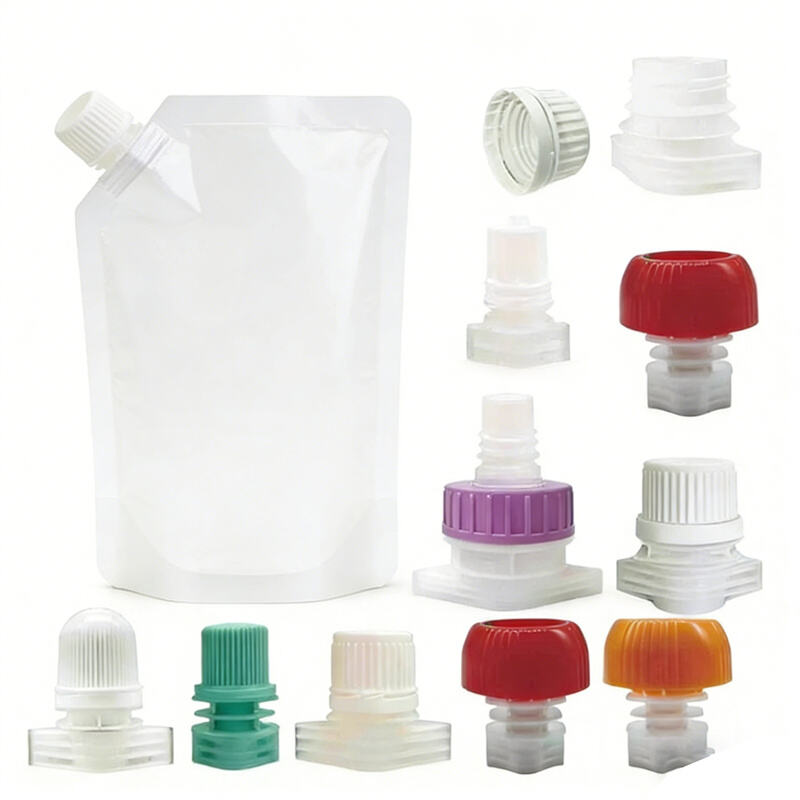
2. Equipment Considerations:
Fully Automatic Spout Pouch Filling Machines: These machines focus on the physical dimensions of the pouch (length and width). They have capacity and size limitations, as the internal filling pump or metering system has a maximum capacity.
Semi-Automatic Spout Pouch Filling Machines: These machines focus on the filling volume or capacity. However, they also have size constraints, as the filling nozzle and sealing mechanism have minimum and maximum opening distances. Pouches exceeding these limits cannot be processed.
Key Factors to Confirm with Customers:
Pouch dimensions (length, width).
Filling capacity/volume.
Material requirements.
Spout size.
Filling method (bottom filling, spout filling, or side opening filling).
3. Selecting the Right Spout
Spout Mouth Size and Product Viscosity:
how product viscosity directly impacts the choice of spout size.
Low Viscosity (e.g., juices, oils): Small spouts (0.86cm-1.6cm)work well for smooth flow and controlled dispensing.
Medium Viscosity (e.g., sauces, smoothies): Medium-sized (16cm-2.5cm)spouts ensure easy pouring without clogging.
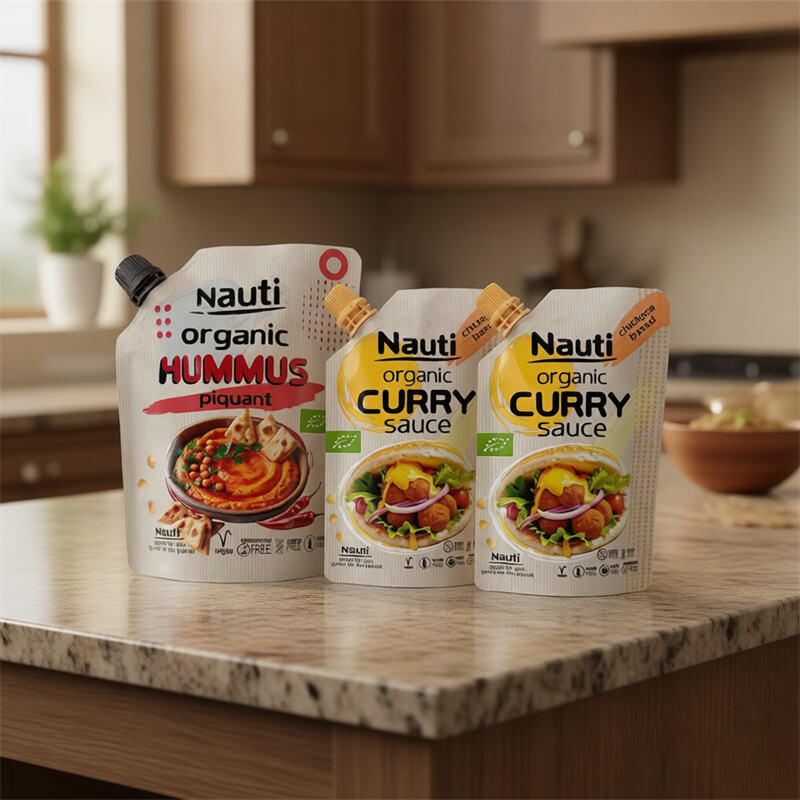
High Viscosity (e.g., hummus, yogurt): Large spouts are essential to avoid customer frustration. Share the example of hummus, where adding water was a workaround, but selecting a larger spout would have been a better solution.(2.5-3.6cm)
Provide a simple viscosity-to-spout-size guide for customers to reference.
Spout Material: Discuss compatibility with product type (e.g., food-grade, chemical-resistant).
4. Temperature Considerations
Matching Pouch Material to Product Needs:
High-Temperature Products:
For sauces or soups requiring sterilization at 100°C or higher, choose retort-grade materials that can withstand high temperatures.
Materials should have high barrier properties to prevent contamination and high strength to endure the sterilization process.
· Low-Temperature Products:
For frozen foods stored below -14°C, select materials that resist brittleness at low temperatures.
Ensure the pouch prevents moisture loss and maintains product integrity during freezing and thawing.
· Key Considerations:
High-temperature materials: Sterilization-ready, high-barrier, and durable.
Low-temperature materials: Flexible, moisture-resistant, and crack-proof.
5. Usage Scenarios
· Food & Beverages:
Juices, smoothies, and soups benefit from spout pouches with small to medium spouts for easy pouring.
Baby food often uses wide-mouth spouts for thicker textures.
· Household Products:
Detergents and cleaning solutions require durable spouts with chemical-resistant materials.
· Cosmetics & Personal Care:
Lotions, gels, and shampoos work well with small, precise spouts for controlled dispensing.
· Industrial Applications:
Lubricants and adhesives need robust spouts that can handle viscous materials.
Copyright © Shanghai Cailyn Industrial Co., Ltd All Rights Reserved - Privacy Policy
 EN
EN