
 EN
EN

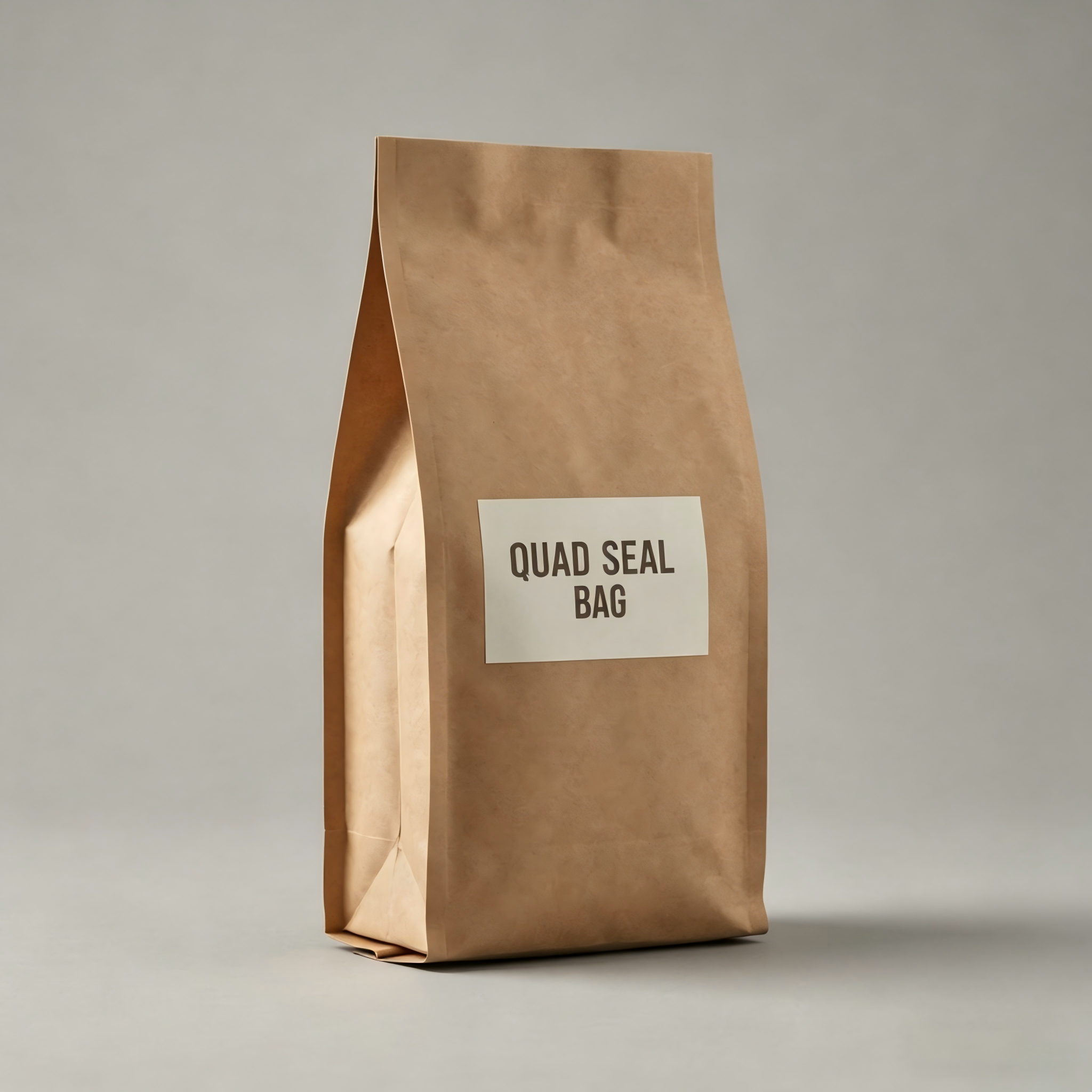
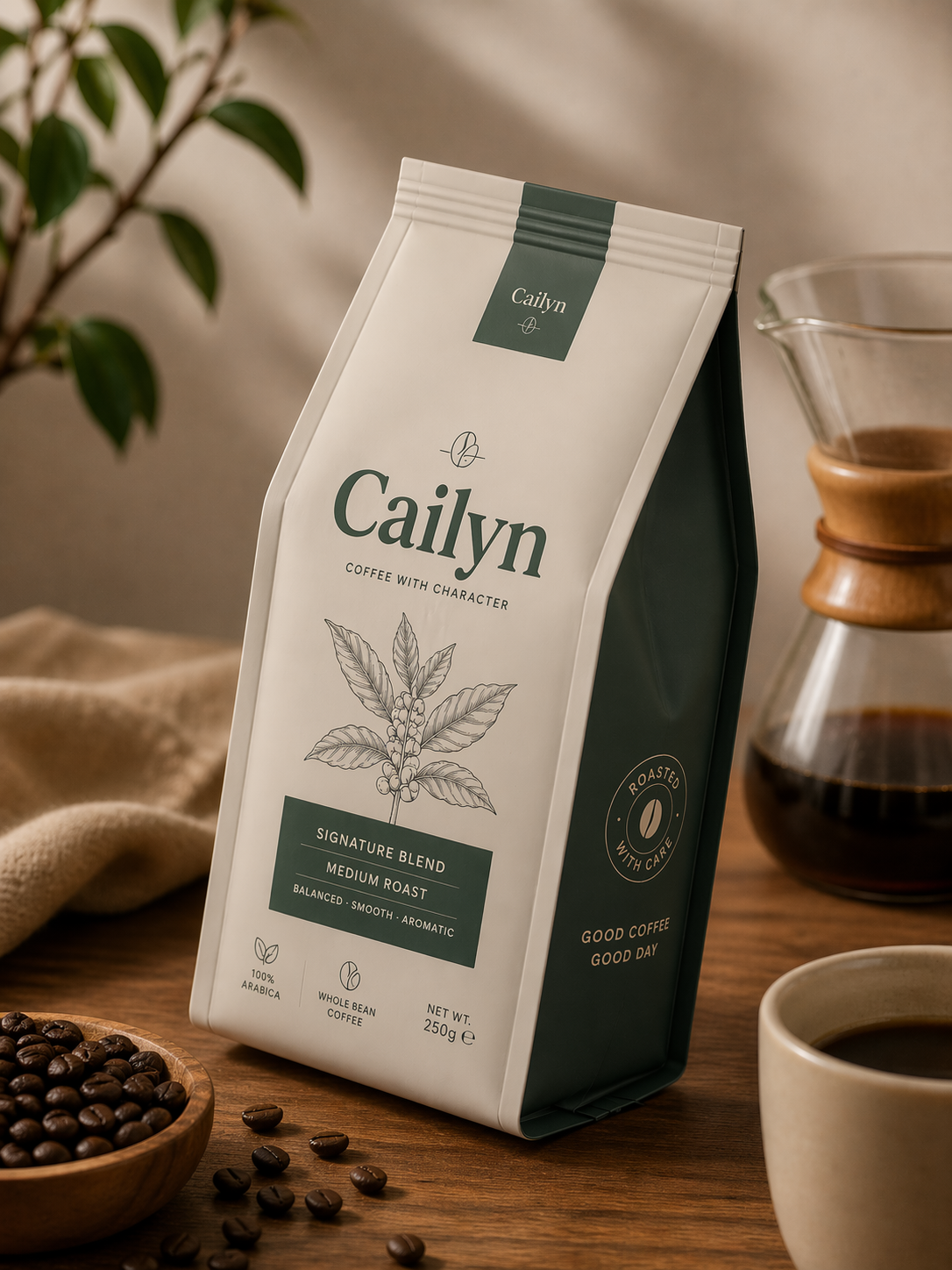
Quad-Seal Bag: The Ultimate Guide to Premium Coffee Packaging
When selecting packaging for specialty coffee or premium tea, one crucial decision is choosing between the Quad-Seal Bag and the Side Gusset Bag. At first glance, they may appear similar—both feature attractive side profiles and generous capacity. However, their engineering, branding potential, and functional experience diverge in important ways.
Quad-Seal Bag vs. Side Gusset Bag: Key Differences
Both formats look similar at a glance — but their engineering and shelf impact diverge significantly.
|
Feature |
Side Gusset Bag |
Quad-Seal Bag |
|
Seal Method |
Sealed at top and bottom, with a central fin seal running down the back. |
Sealed at top and bottom, plus all four vertical corners—no back fin seal. |
|
Back Panel |
Raised central seal disrupts full-panel design. |
Completely flat, uninterrupted back panel—ideal for storytelling or detailed graphics. |
|
Shape When Filled |
Rounded, full, often like a “pillow” or oval. |
Brick-like, with sharp edges and a boxy, upright silhouette. |
|
Rigidity |
Good, but can appear less defined and stability decreases as contents are used. |
Excellent structural support from four reinforced corners; remains upright even when partially empty. |
The bottom line: Side gusset bags suit high-volume, cost-driven production. Quad-seal bags are built for brands competing on premium shelf presence and consumer experience.
The Anatomy of a Quad-Seal Bag
The defining feature of a quad-seal bag is its four-corner edge sealing — heat-sealed reinforcements running vertically along all four edges, from top to bottom. This eliminates the central back fin seal entirely.
Think of the four sealed corners as load-bearing pillars. They hold the flexible film taut when filled, creating a neat, brick-like block that stands upright consistently — on the retail shelf, in a shipping carton, and in the consumer's pantry. This structural rigidity signals quality before the customer even reads a word of your copy.
Uninterrupted Branding: The Flat Back Panel
The flat back panel is a quad-seal bag's most commercially valuable feature.
With a side gusset bag, the central back seam forces designers to split text into narrow columns or shrink graphics to avoid the seal line. With a quad-seal bag, that constraint disappears entirely. You gain a continuous, uninterrupted canvas across all four panels — front, back, and both sides.
Use it for:
- Origin maps and single-estate storytelling
- Tasting notes and brew guides
- Sustainability credentials and certifications
- Full-bleed illustrative artwork without visual breaks
The result is a package that communicates as clearly as a premium retail brand should.
Superior Shelf & Logistics Stability
The quad-seal bag's geometric precision delivers practical advantages beyond the shelf.
Retail: Four reinforced corners provide a stable, upright base. Bags stay neatly faced and organized even as individual units are pulled. A row of quad-seal bags creates a strong visual block — the kind that stops browsers mid-aisle.
Logistics: The predictable rectangular form packs flush against carton walls with near-zero wasted space. High-density pallet configuration, reduced product shifting, and lower dimensional shipping weight — all from a structural decision made at the bag design stage.
Freshness Protection: Advanced Barrier Technology
| Protection Layer | Role |
|---|---|
| Outer PET / kraft layer | Print surface + physical protection |
| Metalized PET or aluminum foil | Oxygen + light + moisture barrier |
| Inner PE / CPP heat-seal layer | Food-safe seal integrity |
| One-way degassing valve | CO₂ release without oxygen ingress |
While both quad-seal and side gusset bags can use high-barrier laminates, the quad-seal's four fully sealed corners eliminate the back seam — a known potential ingress point for oxygen over time. Combined with a premium degassing valve, this structure keeps roast aromatics intact from production line to the consumer's first pour.
Shelf life: 12–18 months under standard ambient conditions.
Technical Specifications
| Feature | Specification |
|---|---|
| Edge construction | 4-corner reinforced edge-seal |
| Printable panels | 4 uninterrupted panels (no back seam) |
| Material options | PET/AL/PE · PET/VMPET/PE · Kraft/VMPET/PE · Mono-material recyclable |
| Barrier (OTR) | < 0.5 cc/m²/day (foil laminate) |
| Barrier (MVTR) | < 1.0 g/m²/day |
| Optional add-ons | Degassing valve · Resealable zipper · Tin-tie · Tear notch · Euro hole |
| Surface finish | Matte · Gloss · Soft-touch · Spot UV · Hot foil stamping |
| Print method | Rotogravure up to 10 colors |
| Food safety | FDA 21 CFR · EU 10/2011 · BPA-Free |
| MOQ | 5,000 pcs |
| Sample lead time | 7 business days |
| Production lead time | 15–20 business days after artwork approval |
Need to verify our company, certifications, or testing reports?
The Cailyn Advantage
Cailyn is an ISO-certified flexible packaging manufacturer with 15+ years of specialty coffee and food packaging experience across North America, Europe, and Asia-Pacific.
- Precision print quality — Rotogravure presses delivering photographic-quality artwork reproduction at scale
- Advanced finishing — Soft-touch matte, spot gloss, hot foil stamping, and embossing options
- Eco-conscious materials — Recyclable mono-material films, compostable PLA structures, FSC-certified kraft paper
- Fast prototyping — Physical samples in 7 business days; production in 15–20 days after approval
We don't just make bags. We build the packaging your brand grows into.
Get Started
[Request a Free Sample →] Material samples in your chosen finish — dispatched within 7 business days.
[Get a Custom Quote →] Share your fill weight, dimensions, and artwork — response within 24 hours.
[Talk to a Packaging Expert →] 15-minute consultation, no commitment required.